Back to page Introduction-----Common lineage family tree-----Map of Alsace
next page : Alsace 17th century
The Holy Roman Empire
and our family's German lineage
At that time, the Alsacian city of Strasbourg was a free Republic inside the Holy-Roman-Empire. According to family tradition, our Catholic family was banished when Strasbourg became Protestant. And they settled in Swabia, where they had previous ties or properties.
The German branch
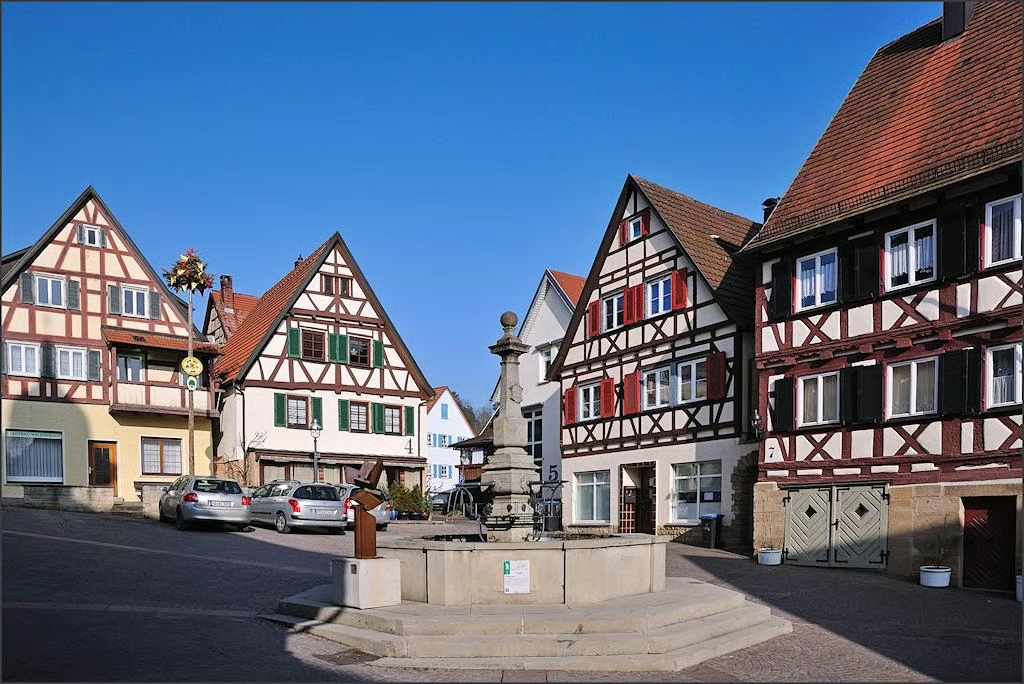 Photo of Waldenbuch
From there comes our family's German lineage : they were not ennobled, and we have not found any connexion with our own lineage. But, according to the information I could obtain from their current representatives, all the German Horrer that I could reach are indeed from the same family. Our name is not about to die out in Germany, since it is still worn by more than 100 people. They all come from the region of Waldenbuch, in Swabia, located between Rothweil, Tübingen, Stuttgart and Esslingen, and descend from Johann Georg Horrer (16th). Georges remained a very common first name in all lineages of the family, particularly in Russia.
Our lineage. Ennoblement diploma (Doc 1a and Doc-1b)
A. The Knight EBERHARD-GEORGES HORRER, probably born around 1570, received, on August 25, 1627, from Emperor Ferdinand II of Habsburg, a diploma where he is qualified as "Our beloved and feal of the Holy Empire 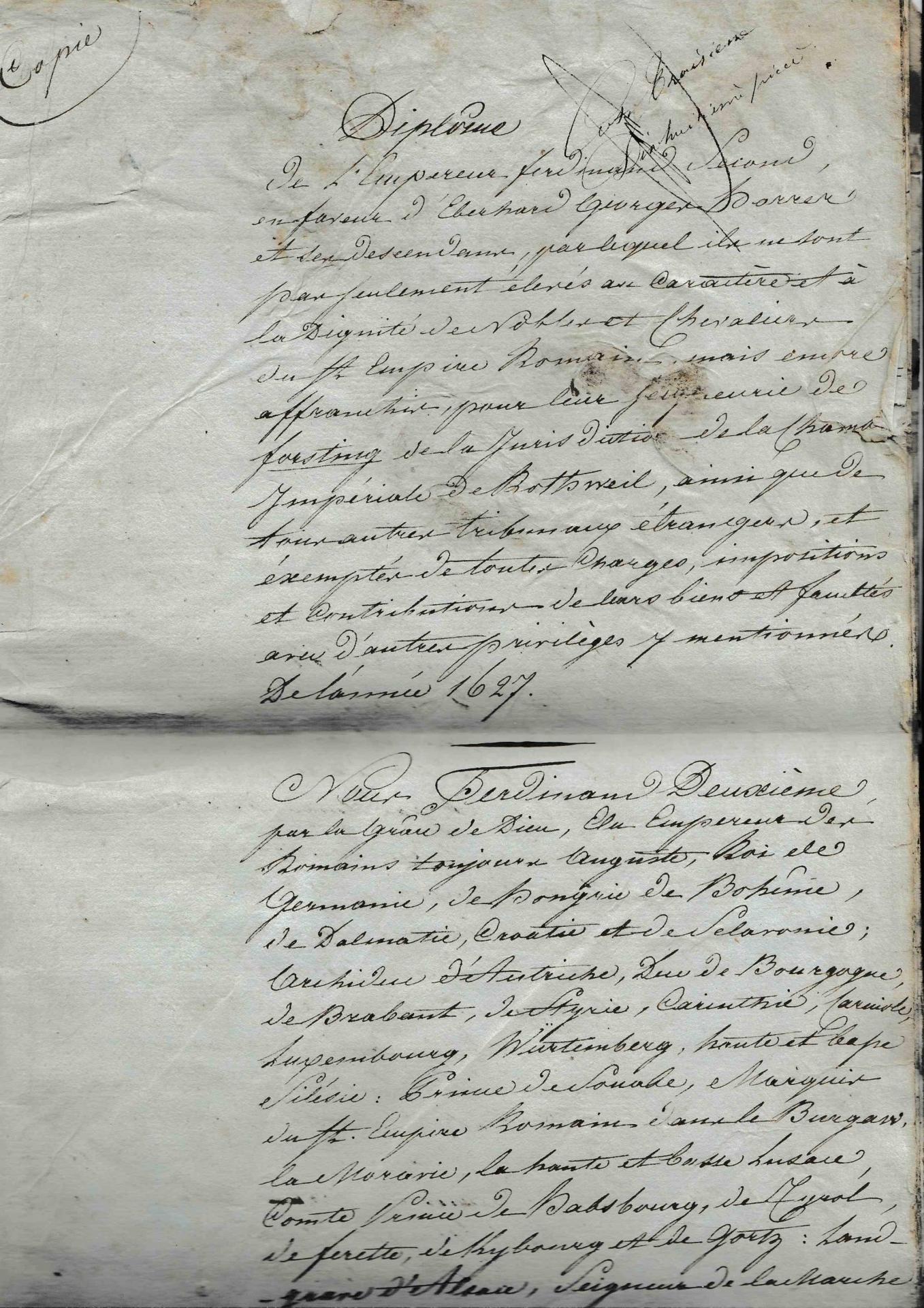 Eberhard-Georges Horrer, noble citizen and one of the magistrates of Our good free and imperial city of Strasbourg" and by whom, in consideration "of his singular fidelity", "of his submission and his attachment..., of his feelings of honor and probity, and noble and virtuous behaviors," as well as the services rendered by his father and his ancestors, he, his two sons and their descendants in a legitimate marriage "both male and female" are raised to the state of Nobles and Knights of the Holy Roman Empire (1)
By the same act, the castle and land of Forsting (2), in the principality of Swabia, held by Eberhard-Georges Horrer "to the heritage of his ancestors since immemorial time", were freed from the imperial Chamber of Rothweil and erected "with the fields, forests, ponds and other estates" depending on it, in free fiefdom of the Holy Empire.
Many other privileges of an honorific order are still listed and detailed in this diploma, which bore the description and drawing of the coat of arms of the said Knights Horrer, with helmet, crown, mantlings and supports, and at the bottom the motto "Non semel ista manent". It was signed: "Ferdinand". Lower down: "Otto, Baron of Nostitz", and lower still "By express mandament of His Sacred Imperial Majesty: M. Arnoldin de Clarstein"(3) .
 Eberhard-Georges Horrer had, as we have seen, two sons, who follow:
1° The Knight HERMANN-GEORGES HORRER
2° The Knight BERNARD HORRER
Both, undoubtedly born in the first years of the 17th century, are indicated in the ennoblement diploma of 1627 as serving at that date in the Emperor's troops "with as much constancy and fidelity as glory".
The Knight JEAN-CONRAD HORRER, mentioned, it seems, in the Main Directory of Lauterbourg as having come in 1618 from Esslingen (Bade) where he would have been born, settled at Lauterbourg. Esslingen is about forty kilometers from Lauterbourg.
NOTES
1/ The Knights of the Holy Roman Empire
The Knights of the Holy Roman Empire were an organization of free nobles from the Holy Roman Empire, directly dependent on the Emperor. They were the remnants of the ancient class of Knights that had dominated the history of southern German lands until the 16th century. To protect their rights, this association is organized into three parties (Parthian) already towards the end of the 15th century.
The free Knights of the Empire were an immediate corpus of the Germanic Empire, without vote or seat in the imperial diets, but by virtue of the peace of Westphalia, the capitulations of the imperial elections and the other laws of the Empire, exercised over their possessions the same rights and jurisdictions of the high nobility.
2/Forsting:
According to my research, there is no Forsting near Rothweil or in Swabia in general. Moreover, the ending in -ing is typically Bavarian, whereas it would be in -ingen in Swabia. There are indeed three Fosting in Bavaria, the most important of which is located near Wasserburg on the Inn, but without any connection either with Rothweil or with our family.
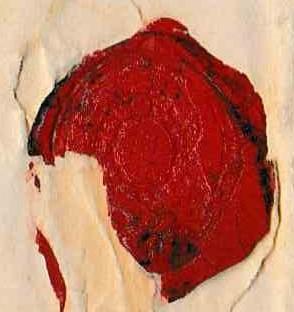
3/The original Act, written on parchment in German, bound in sky blue velvet and containing 24 pages, still existed in Strasbourg in 1767. On 30th October of that year, a verified and collated translation by Johann-Daniel Ensfelder and Humbourg, sworn royal notaries, was delivered to the family representatives. At the authentic diploma was still "attached to a cord mixed with black and gold silk, and a large vermeil box containing the Great Imperial Seal in red wax".