Back to page : Alsace, 18th century / 2-----Common lineage family tree-----Map of Alsace
Next page : in Russia : Philippe-Xavier d'Horrer's children
FRENCH REVOLUTION AND EMIGRATION INTO RUSSIA

The Knight PHILIPPE-XAVIER d'HORRER, lawyer at the Sovereign Council of Alsace (1773), senator and archivist of the Senate of Strasbourg, advisor to the King at the provincial seat of Lower Alsace, bailiff of justice of the department of baillages of Wasselonne and Marlenheim (1787), then domains of the city of Strasbourg, was born in Colmar on April 14, 1745. Baptized the same day at the Saint-Martin collegiate church, he had as godfather the Knight Philippe d'Anthès (1) , and for godmother Antoinette Salomon, born d'Anthès.
In 1787, he was sent by the electors as a deputy to the provincial assembly of Alsace; shortly after, he was appointed by the King member of the assembly of the department of Bas-Rhin and sent as a commissioner of the King to restore order at Haguenau.
On these various occasions, he gave proofs of his devotion to the royal cause which made him the object of a special hate of the regicide faction. Elected mayor of Obernai in 1792, he organized throughout the district of Rheinfelden, under the guise of a mobile national guard, a royalist corps intended to join his arms with those of Prince of Condé's army (= the army of the royalist emigrants) if he had been able at that time to cross the Rhine. Thus, according to Théodore Muret ("History of Condé's army"), "the vast forest of Haguenau was teeming with requisitioners who stubbornly refused to serve the Republic. Shortly after Prince of Condé's entry into Alsace, a large deputation of "Schultz", or mayors, came to offer him 4,000 fully equipped horses, requisitioned by the republican government. Several thousand faithful Alsatians were, assured this deputation, all ready to align themselves under the white flag. Some notables of the province and particularly the Count d'Horrer, mayor of Obernai, whose two sons served in the knights of the Crown, had prepared everything before their emigration for a royalist movement to break out as soon as the Prince of Condé entered France.
After the day of August 10, 1792 (attack of the Parisian people against the Royal Palace) commissioners arrived in Strasbourg, carrying an order from the National Assembly to make an example of the mayor of Obernai. But, warned in time, he emigrated on the night of August 18, 1792, bringing with him his two sons already old enough to bear arms and who had cooperated in the organization of the royal militia of the district of Rheinfelden, and rallied the army of the Prince of Condé : it was a counter-revolutionary army raised by French royalist emigrants with the aim of overthrowing the French First Republic and restoring the Kingdom of France.
 He married in Strasbourg, on July 20, 1773, Marie-Reine KIEN (2) , born on March 14, 1745 and died on October 31, 1828, daughter of Jean-Léonard, senator, ambassador regent (= first magistrate) and consul of the city of Strasbourg, and of Marie-Anne VARNHAGEN (3) (Doc-10 : Marriage certificate).
She later left Alsace with her younger children and, after running many risks, joined her husband in Koblenz, where the emigrants were reunited.
During this flight, she saw a small church in flames, approached it and saved a small pietà. It survived the fire in Moscow (1812) and is still in our family.

An order from the Prince of Condé tied Philippe-Xavier d'Horrer and his sons to the headquarters of the Austrian army commanded by the Count of Wurmser. All three made there the campaigns of 1792 and 1793, and took part in the various fights delivered by this army, whose chief had entrusted to Philippe-Xavier d'Horrer, as a particular mission, the temporary reorganization of the authorities in all the conquered places.
But he soon realized the views of the Emperor of Austria on Alsace and withdrew to Germany. (see Doc-4 : Mention by Philippe d’Horrer concerning the military activity of Philippe-Xavier d’Horrer (April 1793) and of Philippe Léonard d’Horrer, his son (April 1793). in the service of the Austrian and Condé's armies).
Returned to the army of the Prince of Condé on June 1, 1795 as quartermaster of the artillery corps with the rank of lieutenant, at the request of the chiefs of this corps, he did in this capacity the campaigns of 1795, 1796 and 1797, and is taken with this title to control on March 1, 1797.
 Cavalry Regiment of the army of the Prince of Condé
He followed the army in Russia and served briefly as an officer attached to the chief company at the Russian formation of April 1798. Having withdrawn a state of service from the Prince of Condé, on 13/24 (4) September 1798 (see Doc-5 : Certificate from the Prince of Condé) he resigned on 7/18 of the same year and was delivered for him, his wife, his son Pierre, a noble gunner, and his two other sons Philippe and Marie-Joseph, both nobles on horseback, a passport to Moscow; he then settled in Russia, where he took service in the Tsar's army. This is how we see him in 1808, at his son Marie-Joseph's marriage, appearing in the act with the qualification of captain in the service of Russia, the rank with which he retired.
The d'Horrer family lived in Moscow in 1812, when Napoleon was approaching it. The French emigrants who lived there since years were then frowned upon by the Russians who suspected them of links with the enemy, and those who did not have their papers in order or could be suspected of sympathy with Napoleon were deported, evacuated or murdered, etc. The French community was appalled: they had long benefited from an easy situation in Moscow and risked losing everything.
The first days of the occupation of Moscow by Napoleon’s army were awful for the French emigrants who remained in Moscow, like d'Horrer, because they were considered as French traitors passed over to the Russian enemy.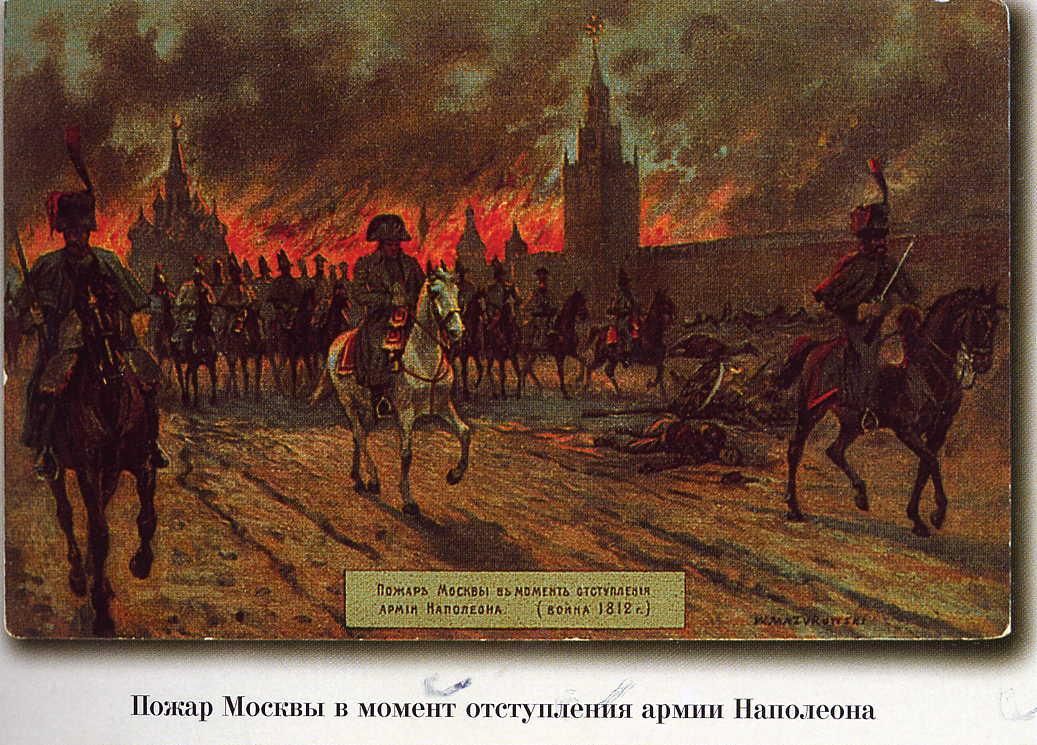 Our family was therefore in the city during at the fire of Moscow by Rostopchin in 1812, and the Knight d'Ysarn tells, in "The history of the French colony in Moscow" that, fleeing from the fire, they took refuge at the Miasnitskaïa with Doctor KARRAS, Philippe-Xavier d'Horrer's son-in-law. (DOC 36 : Account of the fire in Moscow, by the priest of Saint-Louis-des-Français church). A general looting followed. Having absolutely lost everything on this occasion, even his papers and those of his family, he sought in vain a pension from the Prince of Condé, who refused it: (Doc-6, Doc-8, Doc-9).
In 1821, Philippe-Xavier d'Horrer signed the regulations for the Sainte-Darie asylum, a retirement home founded in Moscow in the parish buildings of Saint-Louis-des-Français by the Count of Quinsonas.
The memory of the d'Horrer family was preserved in the parish, but half of the asylum, still existing, was annexed by the MGB (then KGB) nearby. The Russian archives concerning the parish were recovered just before their acquisition by France and contain numerous baptisms, deaths, etc., concerning the d'Horrer as well as documents signed by them and by the KIEN family. He is the author of a "Dictionnaire géographique, historique et politique de l'Alsace" whose first volume (A and B), which has become rare and highly sought after, was published without author’s name in 1787 and the rest of which, remained manuscript, was lost in the revolutionary turmoil. The entire work was to consist of 12 volumes. He is also said to have published, without place or date, a work entitled 'Breviculum jurium episcopatus Argentinensis'.
He died in Moscow, aged 84, on October 31, 1828. He had been made a Knight of Saint Louis on March 6, 1817.
NOTES
1/ d'Anthès : to this family, knighted in 1731, belonged Georges d'Anthès, a well-known personality in Russia, emigrated during the 1830 Revolution, officer in the Regiment of Knights Guards, who killed in duel the famous Russian poet Alexander Pushkin, in 1837.
2/ Kien : Jean-Léonard Kien, brother of Marie-Reine d'Horrer, then lived in Moscow as a Jesuit, preceptor in the Bodisko family.
According to the Baron de Galland, this family is said to have originated in Zurich, where lived around 1420 Jean Kien, who served the emperor of Austria and Spain. The family is said to have left Switzerland after the defeat of the Austrian party to settle near Sélestat. Weapons: From gules to an arrow and a golden trident, passed in a saltire, points at the top, and to a crown of laurels equally broaching the whole.
3/ Witnesses to this marriage: Jean-Léonard Kien, canon of Saint-Pierre-le-Vieux and Louis-Félix Kien, both brothers of the wife. François-Xavier Poirot, associate of the Council of Fifteen, and Jean-Baptiste de Nadal, general advocate of the wife, both brothers-in-law of the wife; Joseph-André Horrer, lawyer at the Sovereign Court of Alsace, brother of the husband; Benoît de Bruder, provost of Appenweyr, and the Knight Jean-André de Capriol de Saint-Hilaire, brothers in law of the husband; François-Pierre de Brobèque, secretary to the Directorate of the Nobility of Low-Alsace.
4) The change from the Julian to the Gregorian calendar meant the loss of 13 days. Events that occurred before January 1918 have two dates. For example, the Bolshevik Revolution occurred on 7th November, 1918 under the Gregorian calendar and on 25th October under the old Julian calendar.