
There is a direct link between the ennoblement of the d'Horrer family by Emperor Ferdinand II on August 25, 1627 (previous chapter, Doc. 1a) and the Thirty Years' War (1618-1648), since the diploma expressly mentions the military service of Eberhard-Georges Horrer's two sons in the imperial troops. This war set the Catholic imperial forces against various Protestant princes and states, and then spread to a large part of Europe. The Emperor was the spearhead of the Catholic Counter-Reformation.
1. In 1627, Ferdinand II needs to secure the loyalty of his servants
Ferdinand II, Emperor since 1619, pursued several goals:
- to restore and consolidate imperial authority;
- to defend the dynastic interests of the Habsburgs;
- to strengthen Catholicism in the territories under his authority;
- to have loyal soldiers and servants to continue the war.
The ennoblement came nine years after the war began, at a time when things were going well for Ferdinand II militarily. His forces had driven back several adversaries and were advancing in the northern territories of the Empire.
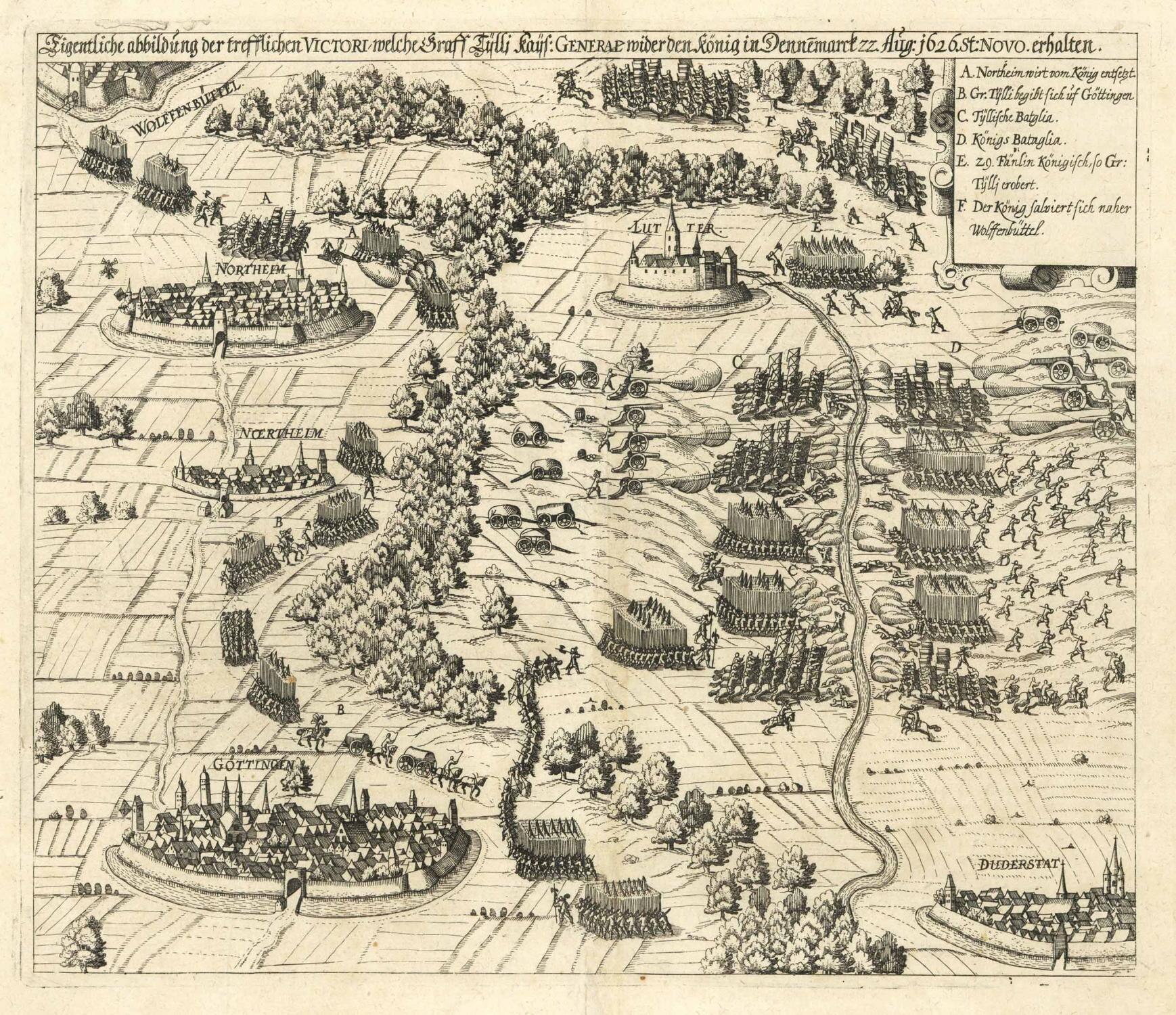
In 1627, the Emperor's armies had won, and were still winning, major successes in northern Germany. The loyalty of the officers and of the families serving the imperial cause was therefore a major political and military stake. It is in this context that the ennoblement of the Horrers must be placed.
2. The two Horrer sons serve in the imperial army
Ferdinand II justified his decision in particular by the services rendered by Eberhard-Georges Horrer's ancestors and by the conduct of his two sons, Hermann-Georges Horrer and Bernard Horrer. Both men were then serving in the imperial troops. The diploma stresses their constancy, their fidelity and their glory in this service.
This passage is essential: it is not simply a patrician family of Strasbourg rewarded for its long standing or its social position. The military services of the next generation are explicitly invoked to justify raising the family to the nobility.
What this means historically
In the context of the Thirty Years' War, military service to the Emperor was a way to obtain social and legal recognition. The ennoblement can thus be understood as a reward granted to a family whose several generations had shown their loyalty to the Imperial House.
3. Why ennoble a whole family rather than reward only the two soldiers?
Ferdinand II did not reward only Hermann-Georges and Bernard for their military services. He ennobled Eberhard-Georges Horrer and extended the privileges granted to his legitimate descendants.
This decision had several advantages for the imperial power:
A lasting reward. The recognition does not end with the careers of the two sons: it benefits the family and its descendants.
A strengthened family loyalty. The honor granted to the father and his descendants values the services already rendered and encourages that loyalty to continue.
An instrument of government. In the Holy Roman Empire, titles and privileges were means of rewarding the sovereign's servants and of strengthening the ties between the dynasty and the families that supported it. Relations between the Habsburg monarchy and the nobility rested largely on this exchange of services, favors and social recognition.
4. And where does the fief of Forsting fit in?
The 1627 diploma is not limited to the ennoblement. It also contains a provision concerning the castle and land of Forsting, presented as held by inheritance since time immemorial. The name Forsting corresponds to a Bavarian place name, not a Swabian one, where the name would end in -ingen.
According to my research, there is no Forsting near Rothweil or in Swabia in general. There are indeed three Forsting in Bavaria, the most important of which is near Wasserburg on the Inn, but without any connection either with Rothweil or with our family.
In fact, imperial diplomas were produced in series and used standardized formulas. The places named did not necessarily describe places that existed or belonged to the recipient. They were often fictitious.
But it is a free fief. In the Holy Roman Empire there was "mediate" nobility and "immediate" nobility. Mediate meant the mediation of another prince on whom one depended (Hanover, Württemberg, etc.). Immediate meant that the family depended only on the Emperor, which was far more prestigious. The ennoblement act clearly states that the land of Forsting was detached from the jurisdiction of Rothweil to become a free fief.
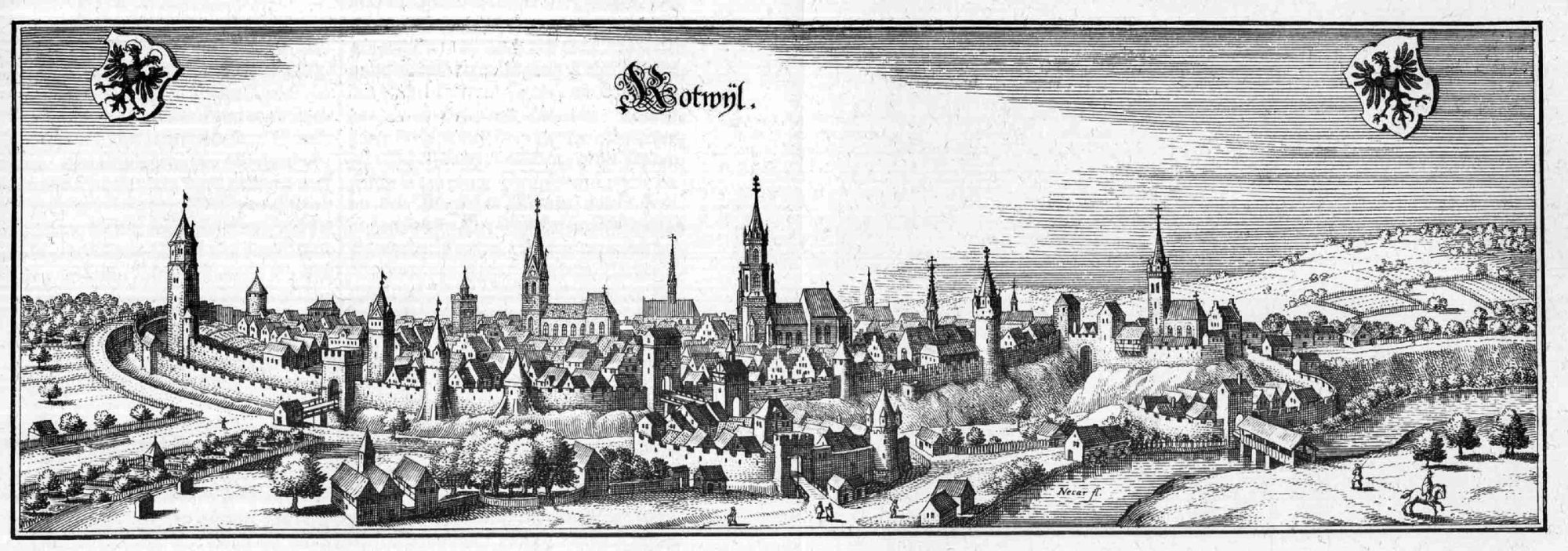
By doing so, the Emperor legally detached this land from the local jurisdictions and placed it under his immediate authority. A free imperial fief required the knight: 1° to pay taxes; 2° to ensure the military defense of his jurisdiction; 3° to provide a contingent or logistical support to the imperial army. This is why the ennoblement act mentions the d'Horrers' right to raise men-at-arms.